- Sproutly
- Posts
- 🌱🥺 Anxiety & Kids Part 2😬🌱
🌱🥺 Anxiety & Kids Part 2😬🌱

Melissa Moore
October 11, 2024
Hello Sproutly Families,
It's important to recognize that children may not have the vocabulary or awareness to articulate their feelings of anxiety. Instead of saying, "I'm anxious," they might express their feelings through physical complaints or behavioral changes.
In this newsletter, you will get....

Feature Article
Photo by Toan Nguyen on Pexels
Kids Included Together posted an article, Anxiety in Children: Creating a Supportive Atmosphere in Childcare, which breaks anxiety in kids into four helpful categories: ways children manifest anxiety, common signs that kids are feeling anxious, ways to soothe anxiety in children, and tips for daily implementation to manage anxiety.
Parenting Tips
Photo by Alexander Mass on Pexels
Children experience anxiety in various ways, and their feelings can manifest differently than in adults. Here are some common signs and symptoms of anxiety in kids:
Physical Symptoms
Somatic Complaints: Children may frequently complain of stomachaches, headaches, or other physical ailments that don’t have a clear medical cause.
Changes in Appetite: Anxiety can lead to a loss of appetite or overeating, depending on the child’s response to stress.
Sleep Disturbances: Anxiety might cause difficulty falling asleep, nightmares, or frequent waking during the night.
Restlessness or Fidgeting: Kids may exhibit increased restlessness, such as tapping their feet, playing with their hair, or having difficulty sitting still.
Rapid Heartbeat or Breathing: During anxious moments, children may feel their heart racing or experience shallow, quick breaths.
Emotional Symptoms
Irritability or Moodiness: Anxious children might become easily frustrated or irritable, often reacting strongly to minor stressors.
Excessive Worrying: They may show signs of excessive concern about various issues, such as school performance, friendships, or separation from parents.
Fear of New Situations: Children may avoid unfamiliar places, people, or activities due to fear of the unknown.
Low Self-Esteem: Anxious children might doubt their abilities and feel inadequate compared to their peers.
Behavioral Symptoms
Avoidance: Children may avoid specific situations, such as school, social gatherings, or activities they previously enjoyed, to escape feelings of anxiety.
Seeking Reassurance: They may frequently seek reassurance from parents or caregivers about their fears or concerns, needing constant validation.
Clinginess: Younger children might exhibit clingy behavior, not wanting to separate from parents or caregivers during drop-offs or transitions.
Difficulty Concentrating: Anxiety can make it hard for children to focus on tasks, leading to decreased academic performance or trouble completing homework.
Social Symptoms
Social Withdrawal: Children may isolate themselves from peers or avoid social interactions due to anxiety about judgment or rejection.
Difficulty Making Friends: They might struggle to initiate or maintain friendships, fearing rejection or negative evaluation from others.
Activity of the Week
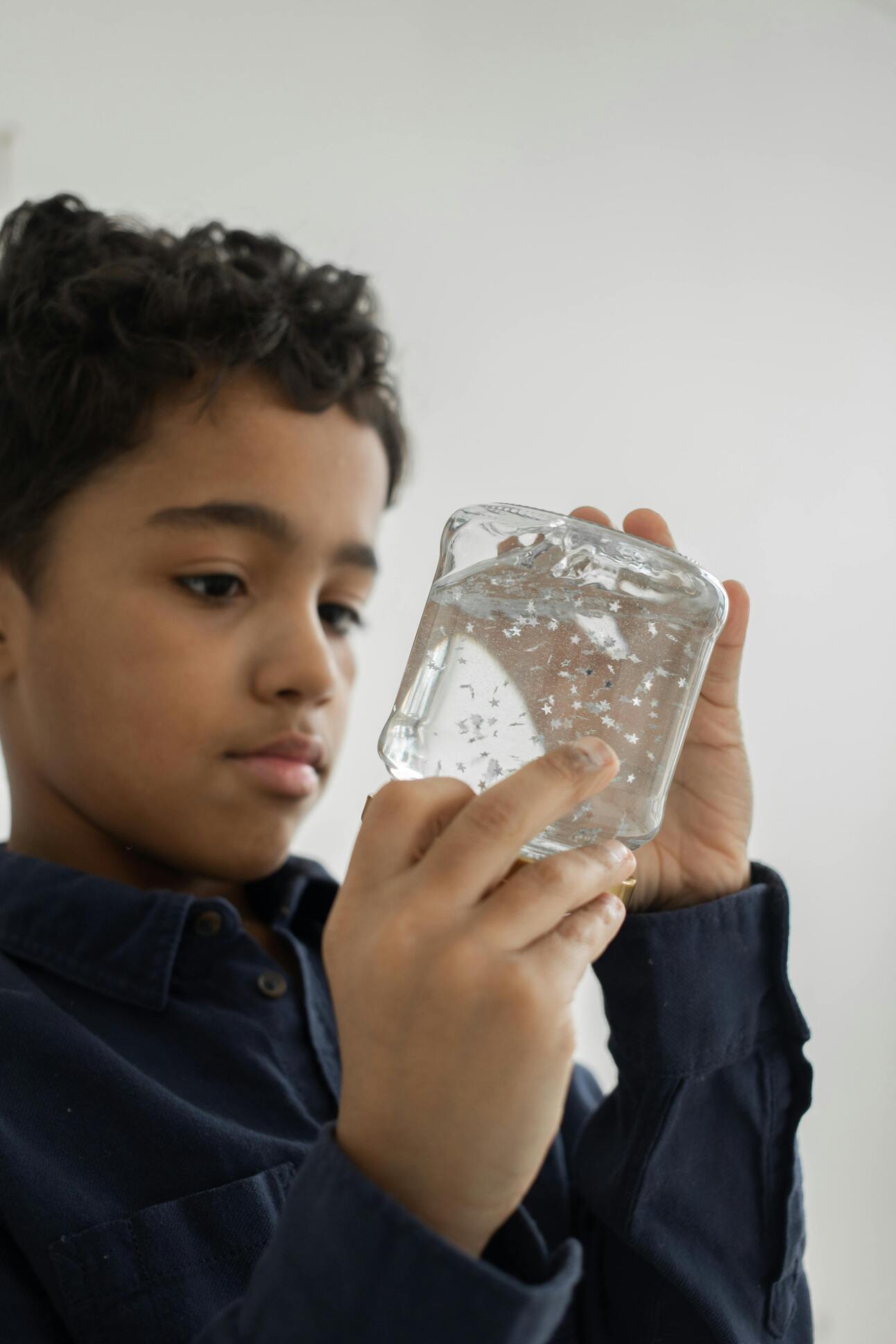
Photo by Monstera Production on Pexels
Create a Calm Down Jar
Materials Needed:
A clear plastic jar or bottle (with a tight lid)
Water
Glitter or glitter glue
Food coloring (optional)
Glycerin or clear liquid soap (optional, to slow the glitter’s movement)
Super glue or hot glue to secure the lid
Instructions:
Fill the jar with water: Almost to the top, leaving a little space to shake the glitter around.
Add glitter or glitter glue: Let your child choose their favorite colors. If using glitter glue, it can act as both the glitter and a thickener for the water.
Add food coloring (optional): Just a drop or two to lightly tint the water.
Mix in glycerin or soap (optional): This will slow the movement of the glitter so it doesn’t settle too quickly.
Secure the lid: Use super glue or hot glue around the rim of the jar to ensure it doesn’t open during use.
Shake it up! Let your child shake the jar and watch as the glitter swirls around and slowly settles. Encourage them to take deep breaths as they watch the glitter fall.
How It Helps:
Visualization for calming down: Watching the glitter settle can act as a calming visual aid, helping children focus their breathing and attention away from their anxiety.
Mindfulness practice: The activity introduces mindfulness, where kids can focus on something in the moment, allowing anxious feelings to pass.
Physical engagement: Shaking the jar gives kids something physical to do, helping release anxious energy.
This activity helps young children develop self-soothing skills and mindfulness, two important tools in managing anxiety.
As parents, helping our children understand and manage anxiety is one of the most powerful tools we can offer them. Incorporating simple practices like deep breathing, mindfulness, and creating a calm-down space can make a big difference in how children cope with their feelings. Each small step helps foster emotional awareness and self-regulation. Remember, managing anxiety doesn’t mean eliminating it completely, but rather equipping our children with the skills to navigate it when it arises.
Warm regards,
Millie & Melissa
The Sproutly Team

New here? Join Our Newsletter
